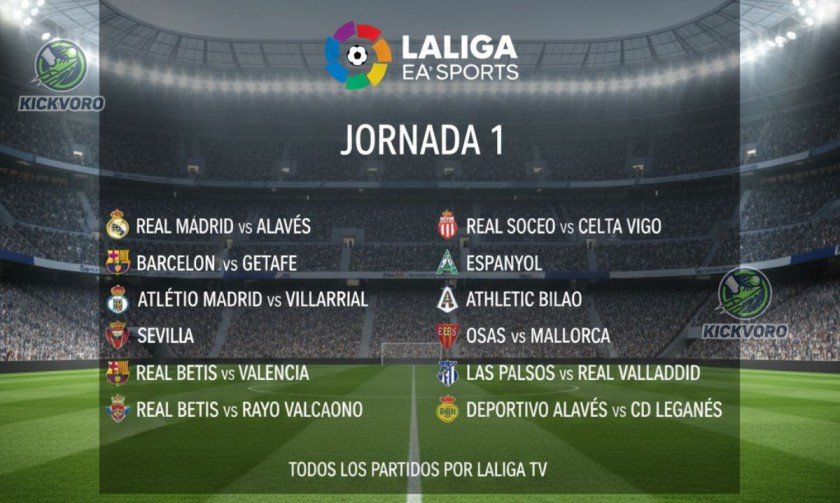
La Liga schedules are not just entries in a calendar. They give the rhythm of Spanish football, shape title races, decide relegation contests, and thus the whole story of a season. Right from the opening match week to the final whistle in May, the La Liga schedule has a very important part in how the teams prepare and deal with the pressures.
Fans look to them to fuel anticipation. Players and coaches see them as challenges and opportunities, and sometimes survival.
Structure of Fixtures in La Liga
In the La Liga league, there are 20 teams that evenly play 38 games each. These games are home and away matches between all the other teams and are pre-released at the start of the league season each year, usually during the summer break.
Each team must contend with:
- 19 home games
- 19 away games
Although it looks relatively straight-forward, the way that the fixtures are arranged could have a big impact upon momentum for teams. A positive start for relatively doable teams could give teams confidence, while difficult starting teams could kick managers into gear too soon.
Importance of Big-Match Fixtures
Some of the matches in La Liga are more important than others. Some of the classic teams in Spanish football include Real Madrid, Barcelona, and Atlético Madrid, and matches among them normally dictate how the league title will be won.
El Clásico, for instance, is more than an ordinary league match. It has implications when it happens:
- League momentum
- Match outcome
- Media Pressure
- Psychological advantage
The outcome of these type of matches will bring about a complete turn around in the season.
Middle table fixtures and less well-known fixtures also matter
Even though major league matches receive widespread attention, lower-tier clashes can also have a significant impact on the ultimate form of the league. Matches involving clubs competing for a place in the European Cup or those struggling against relegation are always fiercely contested and extremely unpredictable.
A single match in the La Liga competition between two half-way-up-the-table sides has the following effects
- To push a club into European competition
- Drag another into relegation trouble
- Trigger managerial changes.
Such fixtures do not normally pull international interest, but they remain critical in determining the league positions too.
Fixture Congestion and Squad Rotation
One challenge associated with La Liga schedules is congestion. Teams that qualify for European competitions and/or domestic cups tend to experience congested schedules, with games played twice a week for a period of time.
This is where the role of fixtures comes into effect. The coach has to balance his team by distributing the players to avoid injuries and fatigue. This is where a team with a shallow squad will struggle with fixtures, as a balanced team will have an advantage.
Fixture congestion becomes particularly critical in the following situations:
- Winter Months
- The late season title races
- European knockout stages
- Handling these phases may make the difference between a champion and a contender.
- Home vs Away Fixtures
All La Liga games are not created equal. Home-field advantage remains an important factor for Spanish teams. They usually play better at home because of:
- Simulated pitch conditions
- Fan Support
- Decreased travel fatigue
Some clubs have very good home form but poorly on the road. This is where scheduling comes into play. Having several consecutive matches on the road can be quite problematic, particularly for teams struggling near the foot of the table.
Effect of Fixtures on Relegation Contests
On the other end of the table, matches in La Liga can often resemble final exams. Side fighting against relegation will study matches, picking those where it may gain points.
Fixtures towards the end of the season involving relegation rivals can often be must-win matches.Such matches are rather tense and physically exhausting, as losing in such matches can be costly.
In some cases, it’s not the quality that will often dictate who will emerge victorious but the ability of teams to get through their last set of six fixtures.
Broadcasting and Global Scheduling
The current scheduling of the La Liga games is also influenced by the international broadcast requirements. The game times are distributed on various days and times in order to cater to the international fans. This has altered the typical weekend football schedule.
Although this leads to a higher global audience and more income, it can add complications for the players. This is due to the fact that shortened time between matches may affect the team’s performance, especially when they are still recovering from injuries.
Weather, Travel, and External Factors
In addition, fixtures are also affected by outside football-related factors such as weather, long-distance travel, as well as international breaks.
A winter fixtures home league match or a long away trip following an international break may affect harmony and rhythm. Clubs that cope better with these may display more consistency throughout the season.
Why Fans are Keen on La Liga Fixtures
La Liga calendars are useful to fans for planning the season emotionally, meaning that the supporters seek:
- Derby dates
- Big away trips
- Decisive finals of the
Fixtures also help form expectations. An easy string of games can bring optimism, while a challenging series can bring anxiety. This emotional tie is one of the reasons football is so absorbing.
Fixtures and the Title Race
The last few months of the season see the significance of La Liga matches amplified. The title rivals study each remnant game meticulously, working out the probable results.
Sometimes the result is decided by:
- Hard away fixture towards the end of the season
- A surprise draw with a lower-ranked side
- Back-to-back games against direct rivals
The schedule of play doesn’t insure success, but it often helps explain patterns of momentum.
Conclusion
The schedule of the Spanish league is the core of Spanish football. Every match in the league shapes strategies, team selection, the sentiment of the fans, and ultimately, the results. The legendary Derbies to the hidden mid-table clashes all matter. A comprehension of La Liga schedules can help fans understand not only what happens, but why it happens as a result of the scheduling. A league of technical prowess and strategic splendor, the schedule is one of the most influential forces that shape the drama of a season.




Leave a Reply