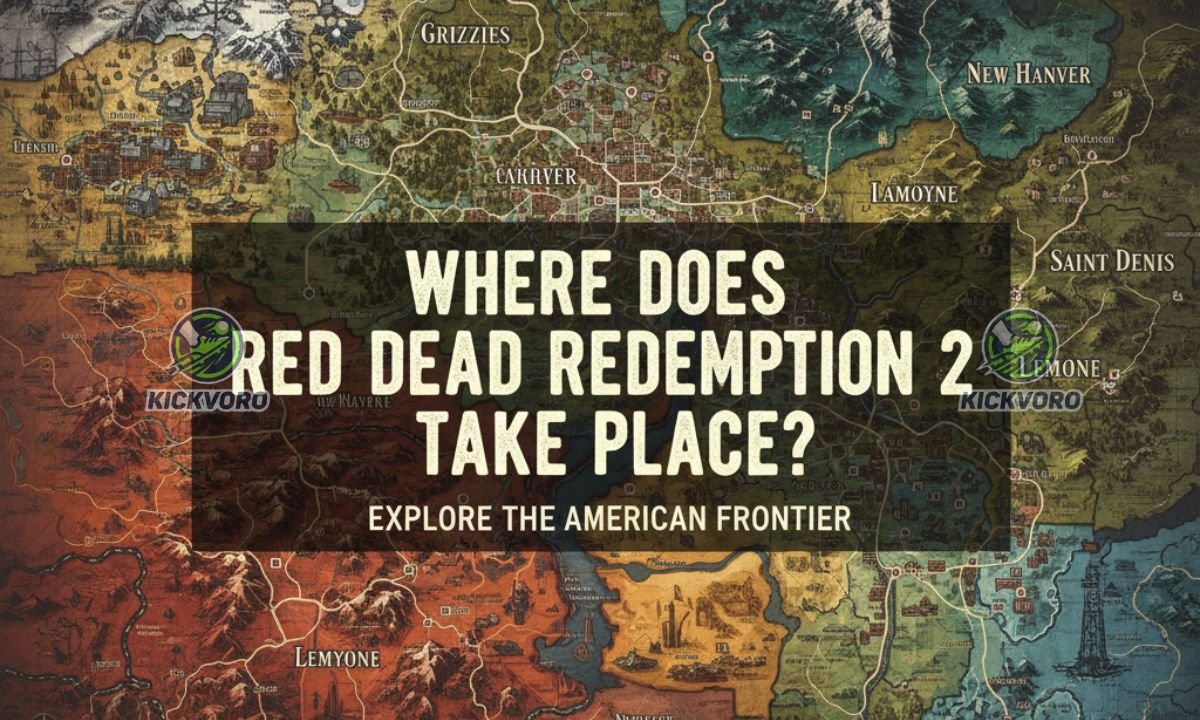
Where Does Red Dead Redemption 2 Take Place? Exploring Its Vast World
Red Dead Redemption 2 is often touted not just for its story, but for the world in which that story unfolds. The dozens of hours players spend riding across mountains, swamps, plains, and towns feel alive and historically grounded. There’s perhaps no more common or important question for new and returning players alike: Where does Red Dead Redemption 2 actually take place?
It’s not that simple, really naming one location. The game is set across one huge fictional region combining several real parts of the United States during the late 1800s.
A Fantasy World Based on Actual America
Red Dead Redemption 2 takes place in a fictional version of the American frontier. Set in 1899, the game takes place during the decline of the Wild West era. Though none of the states in the game actually exist in real life, each region is unmistakably set off of real American locations.
Rockstar Games designed the map to feel believable rather than accurate. Instead, the developers combined geography, culture, and history from various states into one area in order to create a cohesive world that feels more life-like.
This allows the approach of the game to capture the essence of the era without the bounding of real-world limitations.
Core Areas of the Game World
The different regions together constitute the map of Red Dead Redemption 2, each with its own identity, climate, and lifestyle. Together they form one of the most diverse open worlds ever created.
Heartlands: The Open Frontier
The Heartlands represent the quintessential image of the American West: wide plains, rolling hills, and open skies everywhere. Small towns, ranches, and railway lines give it a sense of expansion and change.
This area represents the farmlands of the Midwest and Great Plains, where regular life is influenced by farming and cattle ranching. It’s often where players feel most connected to the traditional outlaw fantasy.
Lemoyne: Southern Influence and Swamps
Lemoyne is highly influenced by the Deep South, mainly Louisiana and its surroundings. It includes plantations, swamps, and humid bayous.
The atmosphere here is thick and oppressive, defined by the motives of old money, rot, and social unrest. The towns in Lemoyne combine Southern charm with hidden depravity, making it one of the most narrative-heavy regions in the game.
New Hanover: Where Industry Meets Wilderness
New Hanover serves as a bridge between rural life and the emergence of industry. You’ll find mining towns, railroads, and early signs of modernization.
This not only shows the clash between progress and tradition, but also one of the central themes within Red Dead Redemption 2: while factories and cities are growing, outlaw lifestyle slowly loses its place.
Ambarino: Mountains and Isolation
Ambarino is the cold, mountainous region inspired by the Rocky Mountains. Snowy peaks, frozen lakes, and harsh weather define this area.
It is a hazardous and isolated life here; aggressive wildlife, slow travel, and survival seems hard-earned. This region further really accentuates the aspects of how uncompromising nature can be, especially in the late frontier period.
West Elizabeth: The Edge of Civilization
West Elizabeth melds the natural beauty of the open expanses and lush forests hugging the flowing rivers, along with settlements that are slowly growing in population and modernization.
This area often represents the future closing in on the old way of life. Law enforcement is stronger, and outlaw activity becomes riskier.
How the World Reflects Time Period
Storytelling in Red Dead Redemption 2 is deeply tied to its setting. A setting of 1899 lets Rockstar capture a moment when:
- Railroads were expanding rapidly.
- Law enforcement was taking a toll of organization.
Freedom and anonymity were being lost for outlaws.
The world itself tells the story. Telegraph lines sweep across the land, trains slice through wilderness, and towns grow louder and more crowded.
Instead of using only the dialogue, it is shown through the environment that the Wild West is dying.
Why the Setting is So Real
What makes the setting special is not just size, but in detail: NPCs follow routines of a daily nature, weather changes behaviours, and wildlife migrates, hunts, and reacts in natural ways.
Small touches to the environment, such as abandoned cabins, remains of battlefields, and struggling settlements, add layers upon layers to the history of the map. Without missions, players can understand the world simply by observing it.
This is the sense of place that makes many players remember locations long after they’ve finished the game.
If you’re planning to start the game or wondering about the time commitment, our guide on How Long Is Red Dead Redemption 2? Story & Completion Time breaks down the main story length, side missions, and 100% completion hours in detail.
The connection to the original Red Dead Redemption
While Red Dead Redemption 2 is a prequel, its setting directly connects to the original game. Some areas expand on regions already known to players, while others add new context and backstory.
This shared world helps ground the series and maintain a thread of continuity, even across different timelines.
Final Thoughts
Red Dead Redemption 2 is set in a fictional but marvelously realized late-19th-century America, taking in parts of the Midwest, the South, the Rocky Mountains, and the fading frontier. Its setting is not just a backdrop, but a living part of the story. The world reflects change, loss, and progress-all themes at the heart of the game. That is why exploring it feels meaningful and not empty. Every region tells its own story, and altogether, they form one of the most memorable settings in modern gaming.




Leave a Reply